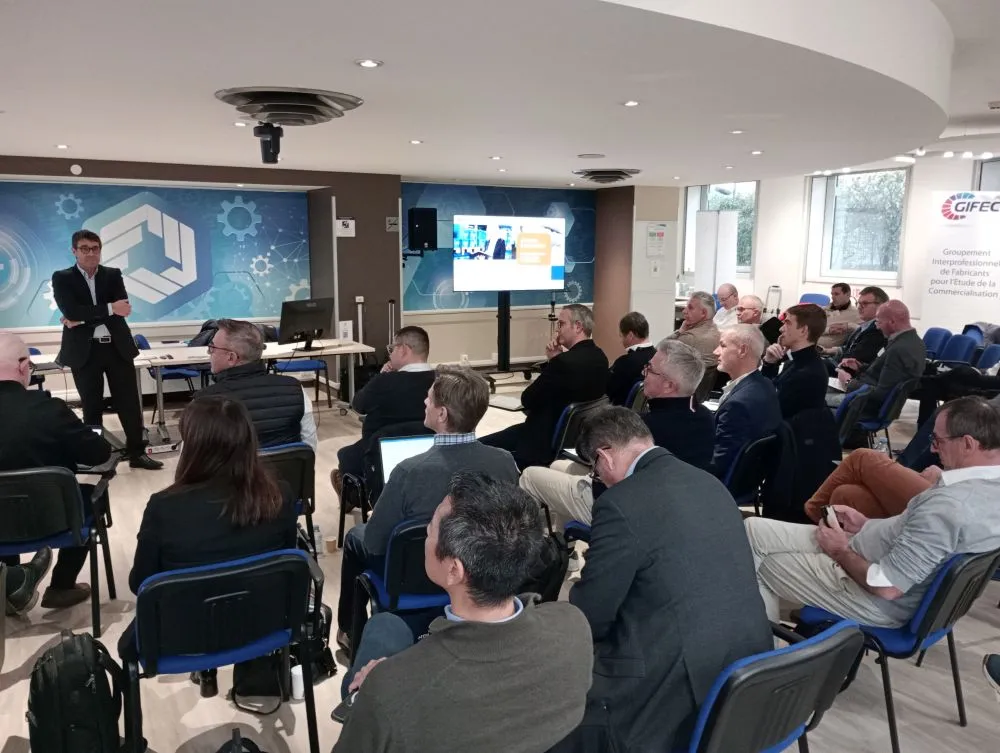
The Procurement Function Under Pressure: Key Insights from MERCURIAL
Through a structured analysis of the procurement function, Philippe Boisseau (CEO of MERCURIAL) reminded attendees how purchasing now sits at the crossroads of strategy, risk management and value creation. Gifec members were able to explore the major shifts reshaping the profession, as well as the priorities identified for 2026.
Key Challenges for the Procurement Function: Alignment, Segmentation and Risk Management
An effective procurement strategy must be fully aligned with the company’s mission, vision and values. This alignment requires a clear understanding of internal needs, but also the ability to read the supplier market and anticipate its changes.
Distinguishing between procurement categories (basic, risk-sensitive, profit-generating and strategic) allows teams to activate the right levers:
- Managing competition or strengthening negotiation for strategic purchases;
- Technology monitoring and long-term contracts for sensitive purchases;
- Simplification and automation for basic purchases;
- Cost optimization for profit-generating purchases.
This segmentation goes hand in hand with a rigorous assessment of risks — economic, contractual and operational. MERCURIAL notably highlighted the importance of monitoring the financial health of suppliers (25% of insolvency or liquidation cases today are said to be linked to cyberattacks).
Economic dependence also remains a critical factor. Ideally, the share of purchases entrusted to a single supplier should not exceed 20% of their annual turnover.
Securing Procurement in a Context of Tension and Uncertainty
According to the 2025 Purchasing Trends survey presented by MERCURIAL, securing purchases is the number one priority for procurement departments.
The five actions considered most strategic are:
- Dual sourcing;
- Long-term contracts;
- Securing supply chains;
- Supplier support;
- Data protection.
These priorities reflect a widely shared reality. The procurement function operates in a more uncertain, volatile environment, increasingly exposed to disruptions. The rise in business failures observed over the past fifteen years reinforces the need to place risk management at the heart of procurement strategy.
CSR, Supplier Relations and Negotiation: Towards a More Responsible and More Professional Procurement Function
Beyond price, procurement now fully integrates CSR considerations, including reducing environmental impact, meeting social obligations (Gender Equality Index, Rixain Law) and complying with new European extra-financial reporting requirements under the CSRD (Corporate Sustainability Reporting Directive), which strengthens corporate transparency on sustainability performance.
This shift is reflected in the growing importance of supplier assessments based on social, ethical and environmental criteria, as well as in the need to develop dedicated performance indicators.
The procurement function is also transforming on an operational level. The buyer now plays a central role, navigating between powerful suppliers and demanding internal clients, while their scope of responsibilities expands: managing TCO (Total Cost of Ownership), contract structuring, risk anticipation, supplier panel management and internal coordination.
MERCURIAL dedicated a significant part of its conference to strengthening negotiation skills. Through the methods presented (four-step process, negotiation “ladder,” and concession frameworks), Gifec members received concrete tools to improve their performance and secure agreements.
See you at upcoming Gifec events to continue exploring these topics and to help make procurement, distributor relationships and CSR true drivers of development for the sector.